T-Learning is our future-focused educational model that empowers students to become agile, future-ready global leaders ready to rethink, reinvent, and resolve the challenges of tomorrow.
T-Learning is a transformative educational framework designed to meet the demands of a rapidly evolving world. It transcends traditional content delivery by empowering students through experiential learning, critical reflection, collaborative knowledge-building, and active exploration. Grounded in human-centered innovation, this approach cultivates future-ready leaders who think broadly, adapt confidently, and excel as creative problem solvers across diverse fields.
“T” in T-Learning stands for multiple core values:
- Taejae Data and AI program
- Transformative learning and student growth
- Transdisciplinary problem-solving and creativity
- Tech-empowered learning experiences
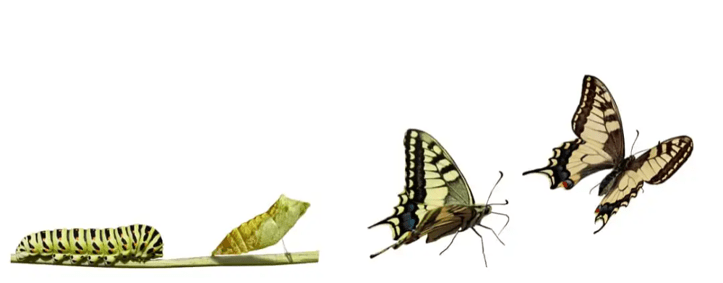
Learning Data and AI skills is all about ‘Transformation’.
Transformation of your beliefs, values, experiences, and perspectives, enabling you to become agents of change.
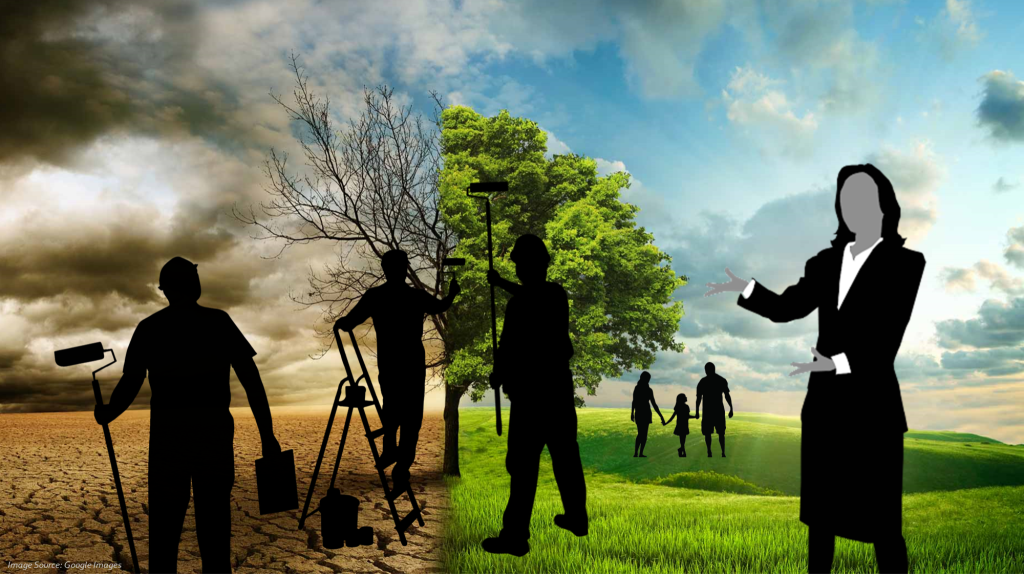
Transformation of the world into a desirable future.
Recognizing that traditional education cannot ignite the transformational change our world demands, we have initiated Transformational Learning to fundamentally reshape how we learn, think, and lead, which we named T-Learning.
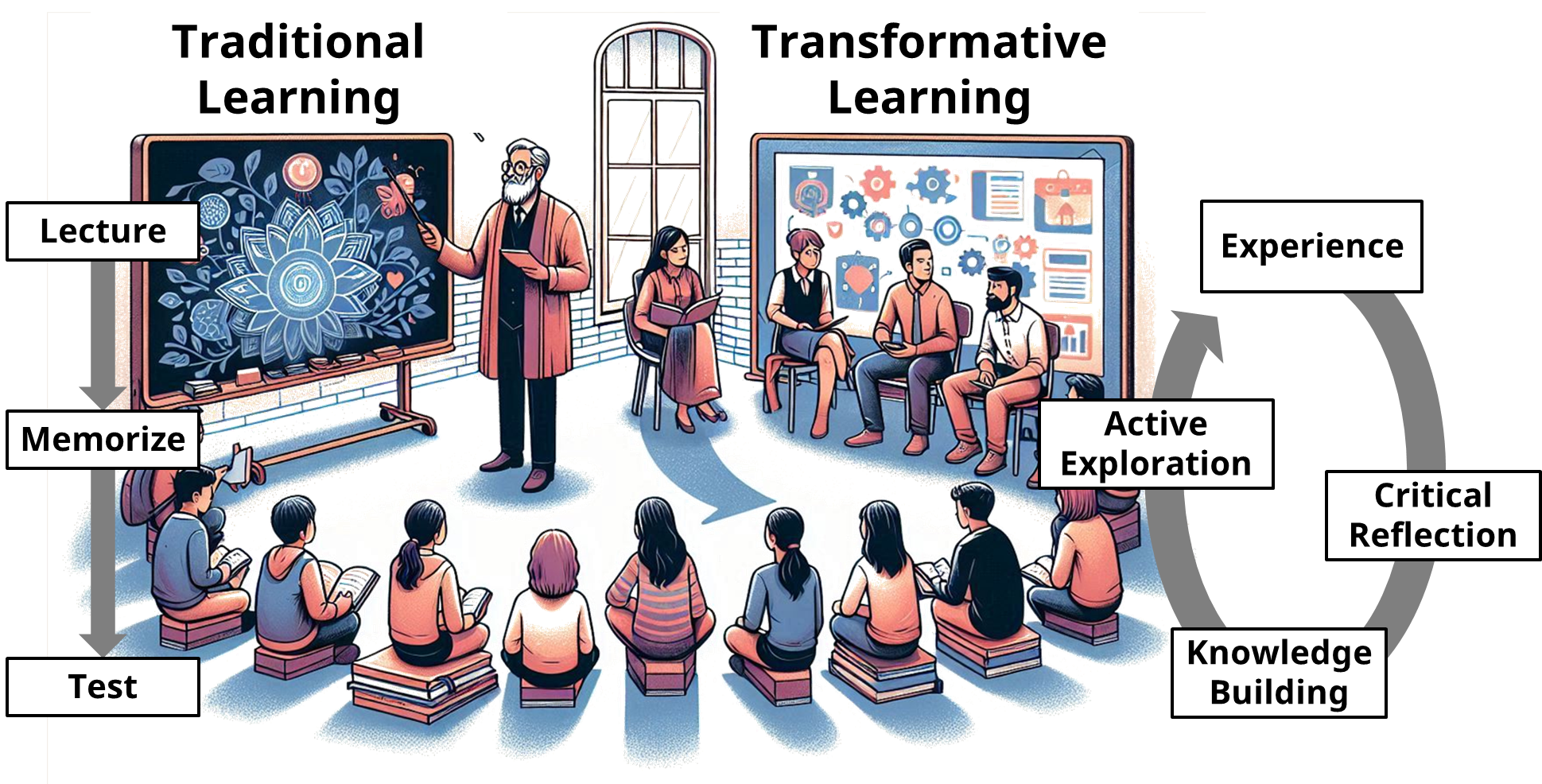
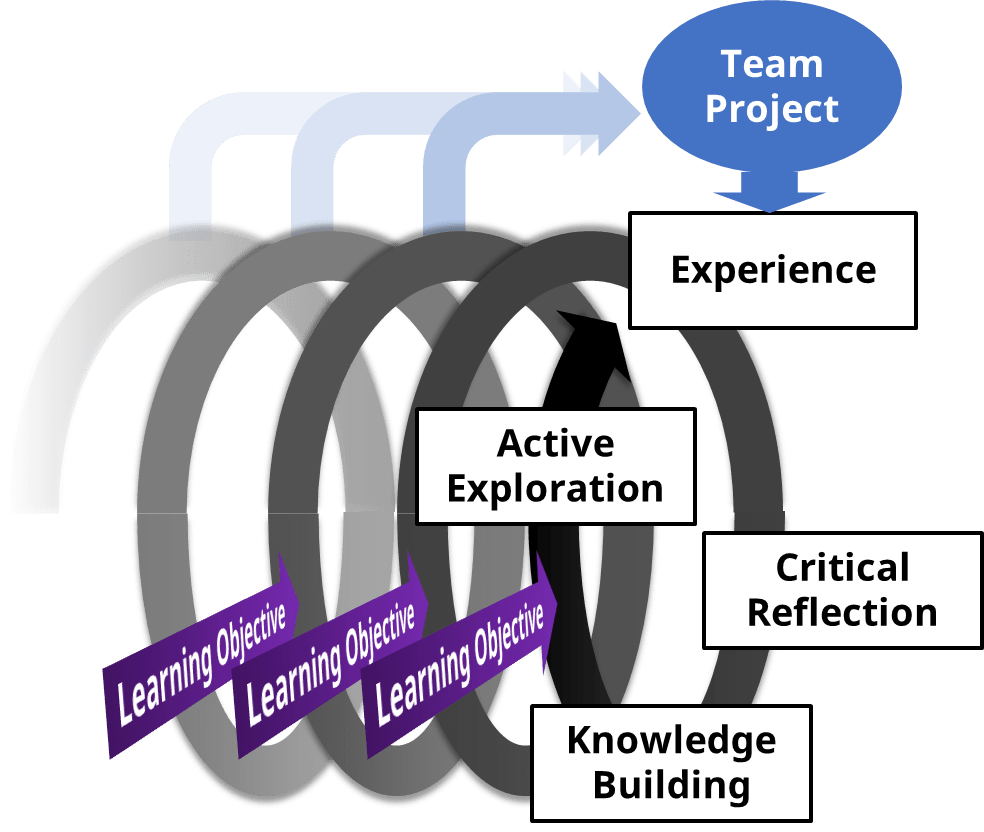
T-Learning Framework
Key Components
T-Learning Framework is structured around purpose-driven learning loops, where each cycle begins with a clear Learning Objective and progresses through four interconnected stages:
1. Experience
Learners start with authentic, real-world experiences, immersive tasks or observations that provide a foundation for learning grounded in relevance and context.
2. Critical Reflection
Students reflect deeply on their experiences, examining underlying assumptions, evaluating outcomes, and making personal or social meaning of what they encountered.
3. Knowledge Building
From reflection emerges the construction of new knowledge. This stage involves synthesizing insights, drawing connections, and forming frameworks that are personally and academically meaningful.
4. Active Exploration
With a stronger conceptual foundation, learners engage in deeper inquiry and self-directed or team-based exploration—asking more complex questions, testing ideas, and extending learning beyond initial experiences.
Deepening Through Iteration
Each loop deepens the learner’s capabilities. Successive cycles reinforce and expand skills, mindset, and understanding, building readiness for complexity and uncertainty.
Team Project as Culmination
The process leads to a Team Project, where students apply their accumulated learning in collaborative, innovative ways. This step mimics real-world challenges, requiring integration, communication, and co-creation.
Class Model
Transformative Class Model rooted in the T-Learning framework, shows how learning unfolds through a dynamic, learner-centered cycle. The model connects learning objectives with a multi-phase process that integrates experience, reflection, collaboration, and exploration, leading toward deeper understanding and the capacity to transfer knowledge into real-world problem solving and collaboration.
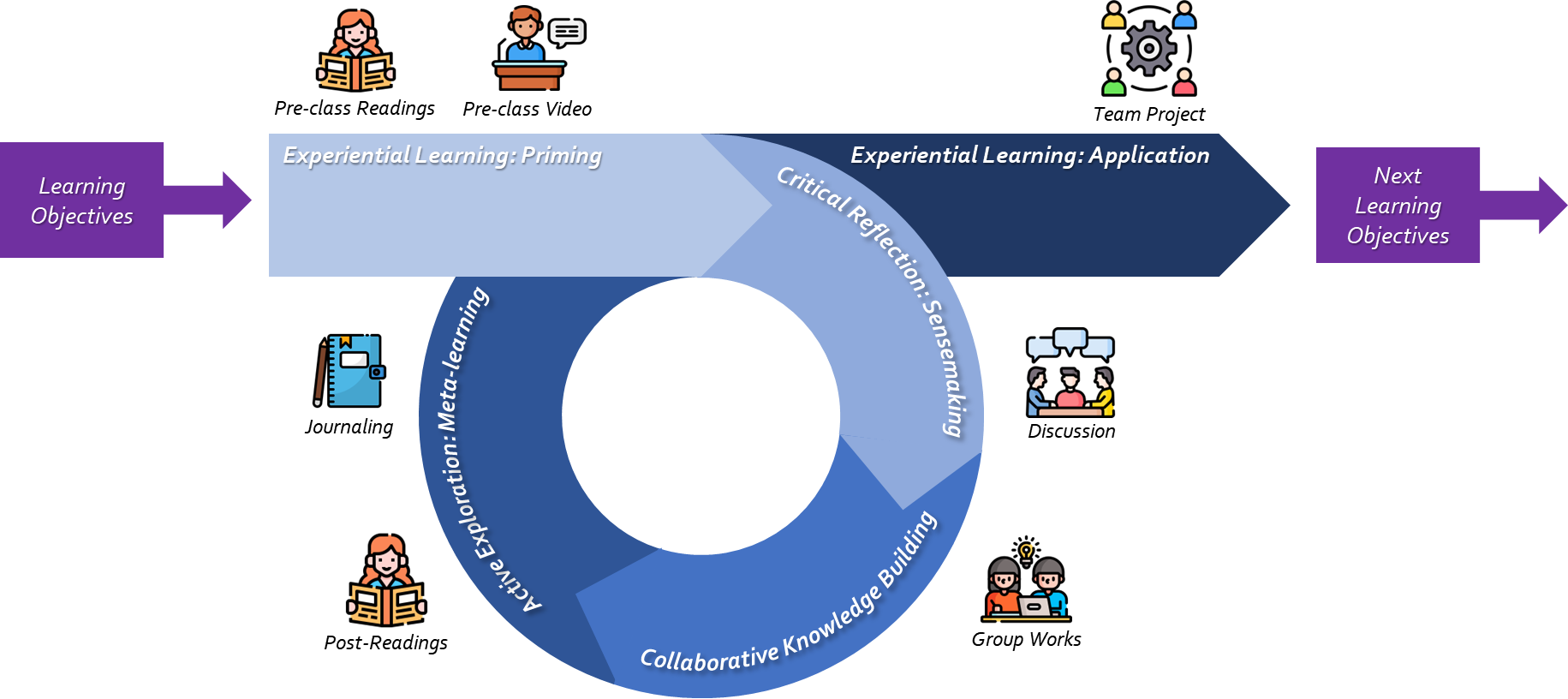
Our intention is to reframe learning as a cycle of experience, reflection, collaboration, self-exploration, and application, empowering students to think critically, learn deeply, and act creatively. Here follows the component breakdown:
1. Learning Objectives
- The process begins with clearly defined learning objectives that guide all stages of the learning experience.
2. Experiential Learning: Priming
- Students are first exposed to a new topic through hands-on, contextual, or immersive activities including a pre-class video designed to introduce key ideas.
- The goal is to build initial awareness and curiosity before formal instruction, often supported by pre-class readings, videos, simulations, or various forms of guided materials.
- This stage lays the foundation for deeper engagement.
3. Critical Reflection: Sensemaking
- Students reflect on their priming experience to recall, analyze, and make sense of what they encountered.
- Activities may include guided discussions, team dialogue, or fun quizzes to reinforce learning.
- Through these activities, they can recall fragmented ideas, surface initial misunderstandings, and begin connecting concepts meaningfully.
- This deepens awareness and forms the bridge between raw experience and structured knowledge.
4. Collaborative Knowledge Building: Thought-assembly
- In this phase, students collaborate in teams or peer groups to synthesize and expand their understanding.
- Activities can be joint analysis, team-based problem solving, presentation, and/or debate, through which they can co-construct knowledge, filling in gaps and sharpening conceptual clarity together by challenging and refining each other’s thinking.
- This builds shared knowledge and deeper insights.
5. Active Exploration: Meta-learning
- Learners then move into independent or semi-guided inquiry, testing ideas, applying knowledge to new contexts, or engaging in thought experiments.
- They also engage in meta-learning by documenting their thinking through journaling or other forms of self-directed reflection.
- This stage supports personal ownership and internalization of learning.
6. Experiential Learning: Application
- Finally, students apply what they’ve learned to a real-world or student-chosen project, integrating skills and knowledge in a meaningful, visible way.
- This stage represents the culmination of the learning cycle and solidifies transformation through action.
7. Next Learning Objectives
- The cycle then progresses into new learning objectives, building on prior experiences.
- Learning becomes continuous, interconnected, and evolving — not confined to single topics or isolated tasks.
Class Timeline
A typical class timeline designed around the T-Learning Framework blends structured time with learner-centered activities across three phases: Before Class, In Class, and After Class. This timeline supports a transformative learning experience by balancing guided structure with autonomy, collaboration, and reflection. It moves beyond content delivery and empowers students to think critically, co-create knowledge, and take action.
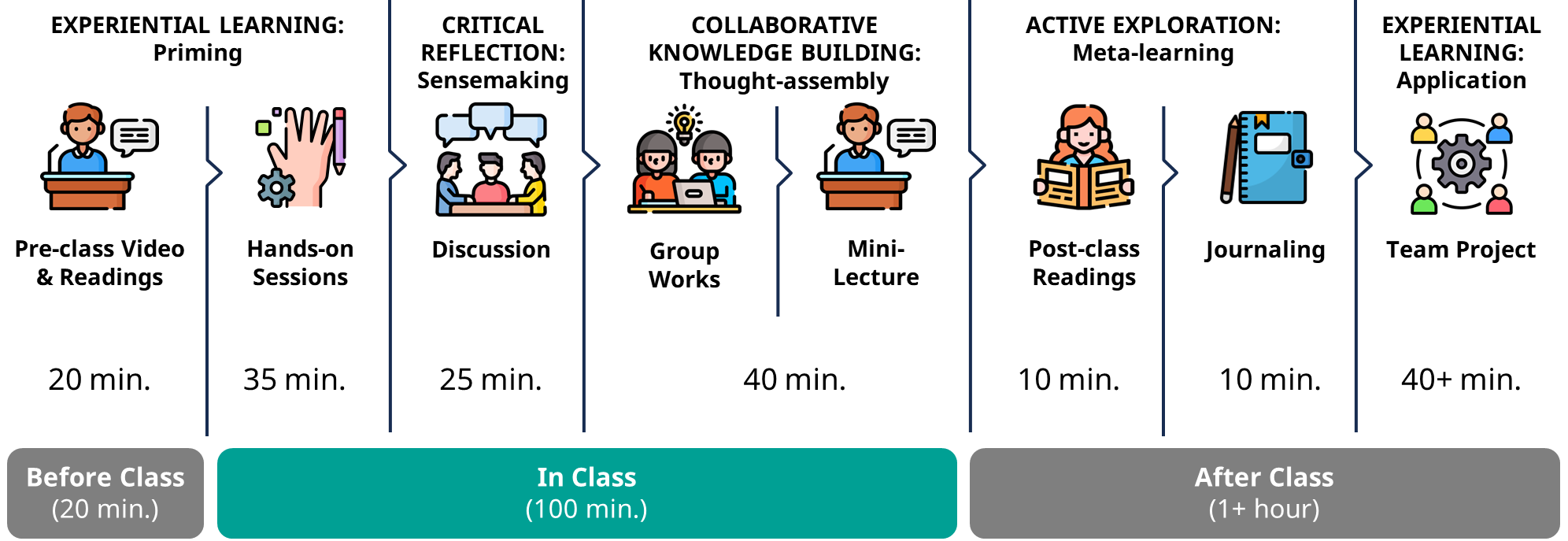
1. Before Class (20 min.) – Priming
Goal: Prepare students with light, focused exposure to the topic and activate curiosity and introduce core concepts.
Activities:
- Watch a pre-class video to get introduced to core ideas.
- Engage in short preparatory tasks (e.g., questions, prompts) or complete a micro-task to spark curiosity and activate prior knowledge.
- Students arrive with primed understanding, ready to engage.
2. In Class (100 min.) – Engagement & Collaboration
Goal: Ignite and deepen understanding through reflection, collaboration, and shared meaning-making. This phase is designed to move students from surface-level exposure to rich conceptual engagement by combining active participation with guided facilitation.
Activities:
1) Hands-on Exercise
- Students engage in experiential tasks, simulations, or creative exercises to explore the topic firsthand.
- Short activities or prompts give students a chance to explore or simulate real-world challenges
2) Sensemaking Dialogue
- Through peer discussion and group sharing, students analyze their experiences, challenge their thinking, and clarify meaning.
- Students reflect on their initial impressions, recalling key points and surfacing questions.
3) Group works and/or creative studios
- Small groups work together on collaborative missions, applying knowledge, solving problems, and co-constructing understanding.
- They can engage in a jigsaw, case study, or group mapping activity.
4) Mini-Lecture or Instructor Feedback
- Instructor steps in with targeted input, not as a content deliverer, but as a responsive facilitator to clarify, expand, or connect student contributions to broader frameworks.
- Synthesize emergent ideas, clarify key concepts, and guide students toward deeper understanding.
- It should be timely and strategic intervention—brief but impactful—designed to amplify what students have already begun constructing on their own.
- It may include:
- addressing misconceptions or surfacing common patterns in students’ thinking,
- reinforcing key takeaways that align with the learning objectives,
- introducing frameworks, vocabulary, or models that help students structure their ideas more effectively,
- connecting class discussion to broader academic or real-world contexts,
- offering next-step resources such as readings, examples, or guiding questions for after-class work.
3. After Class (1+ hour) – Reflection & Application
Goal: Internalize and extend learning through reflection and authentic application.
Activities:
1) Extended Knowledge Building
- Students revisit gaps or deepen their understanding through post-class readings, follow-up videos, or peer-shared insights.
2) Meta-Learning through Journaling
- Learners document their thinking in journals, blogs, or learning logs — tracking insights, struggles, and remaining questions.
- Students are encourages to reflect on their learning journey, document key takeaways, and identify lingering questions.
- This process enhances metacognitive awareness.
3) Authentic Application
- Students apply what they’ve learned to a self-chosen project, problem, or task, reinforcing learning through meaningful action.
- Learners are encouraged to seek for any real-world challenges, team missions, or personal inquiries to be used as a semester-wide project, to be used to solidify their transformation from concept to practice.
 Welcome to Taejae Data and AI Hive